
Wallpaper is a go-to choice for anyone who wants "more than just white walls." But in Thailand, wallpaper is money thrown away. Humidity of 70—90% does the rest: adhesive softens, paper swells, and mould grows behind the wallpaper.
At LuxeSpan, we regularly strip wallpaper that's less than six months old. Here's what happens and what actually works in the tropics.
What happens to wallpaper in a tropical climate
- Adhesive loses bond strength. At humidity levels above 80%, wallpaper paste softens. Wallpaper begins peeling off the walls within 2—4 months
- Mould behind the wallpaper. The gap between wallpaper and concrete creates a perfect environment for fungus — warm, damp, and with zero ventilation
- Paper deforms. Even vinyl wallpaper on a paper backing swells and bubbles
- Odour. Mould behind wallpaper produces a distinctive musty smell that cannot be eliminated without removing the wallpaper entirely
Why "moisture-resistant" wallpaper doesn't work either
Manufacturers rate wallpaper as "moisture-resistant" at humidity levels up to 65%. In Thailand, humidity runs at 80—95% — well beyond the specification of any wallpaper. Even fibreglass and non-woven types fail: the problem isn't the wallpaper itself, but the adhesive and the substrate.
Acoustic stretch walls: a permanent alternative to wallpaper
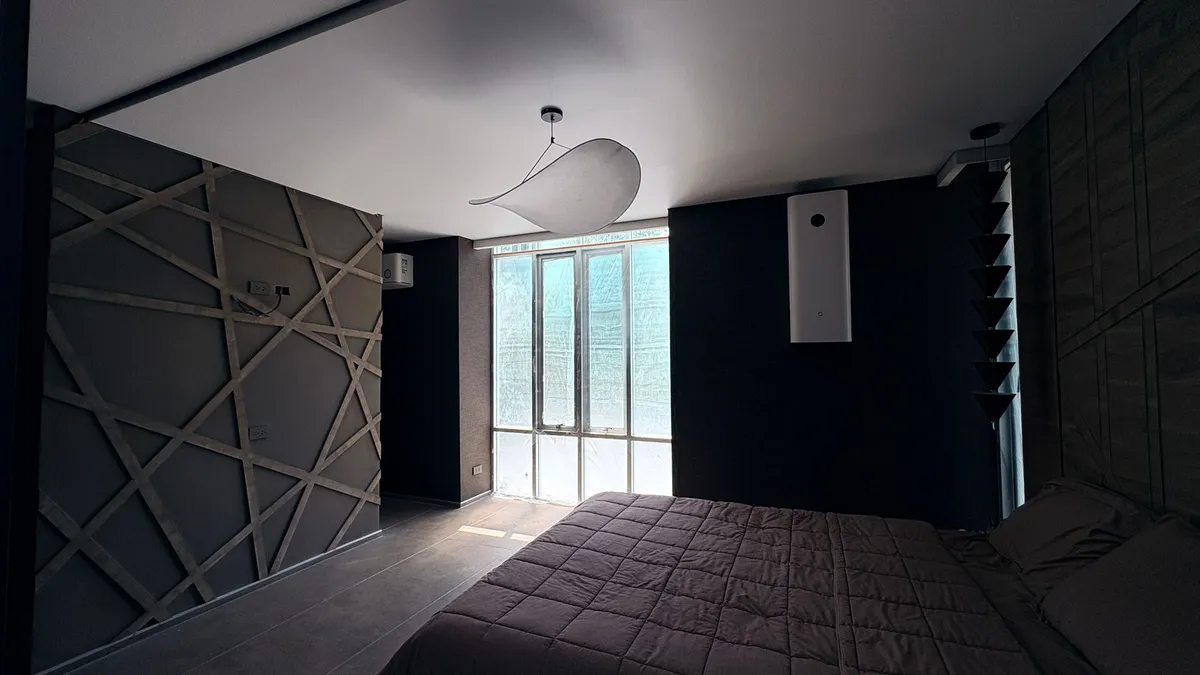
The LuxeSpan acoustic stretch wall is an engineered system where the high-strength synthetic finish is not glued to the surface but mounted on an independent aluminium frame. A technical air gap is created between the decorative layer and the concrete substrate, housing a 100% synthetic acoustic PET absorber (we categorically avoid natural cork or cellulose due to the risk of termites and decay).
| Parameter | Wallpaper | LuxeSpan Acoustic Stretch Walls |
|---|---|---|
| Lifespan in tropics | 3—6 months | 10+ years |
| Mould | Inevitable | Eliminated |
| Design | Limited to catalogue | 200+ colours, photo printing |
| Installation | 1—2 days + drying | 4—6 hours |
| Warranty | 0 | 10 years |
See acoustic stretch walls → stretch ceilings, or the full solutions catalogue.
Replace wallpaper once and for all
Free survey + material samples for acoustic stretch walls + cost estimate. The engineer will bring texture catalogues and help you choose the perfect solution for your interior.
рџ’Ў Why the adhesive fails
Wallpaper adhesives are based on methylcellulose or starch (CMC). At temperatures above +28 °C and relative humidity exceeding 75%, these organic polymers undergo hydrolysis and biological degradation (consumed by bacteria and fungi). As a result, the adhesive layer irreversibly loses its bond, turning into a liquid substance — causing even the most expensive vinyl wallpaper to peel off in Thailand's climate.