
Want a wall that looks like stone, wood, or has a 3D relief? Forget about plaster, panels, and adhesive. Quiet stretch walls with textured printing in Thailand deliver any design — dust-free, in just 1 day.
The problem: decorative panels in the tropics
- 3D plaster panels: crack, absorb moisture, mould grows in the joints
- Wood panels: termites, warping, fading
- MDF panels: swell at humidity above 80%
- Stone cladding: heavy, expensive, structural load limitations
The solution: quiet stretch walls with custom design
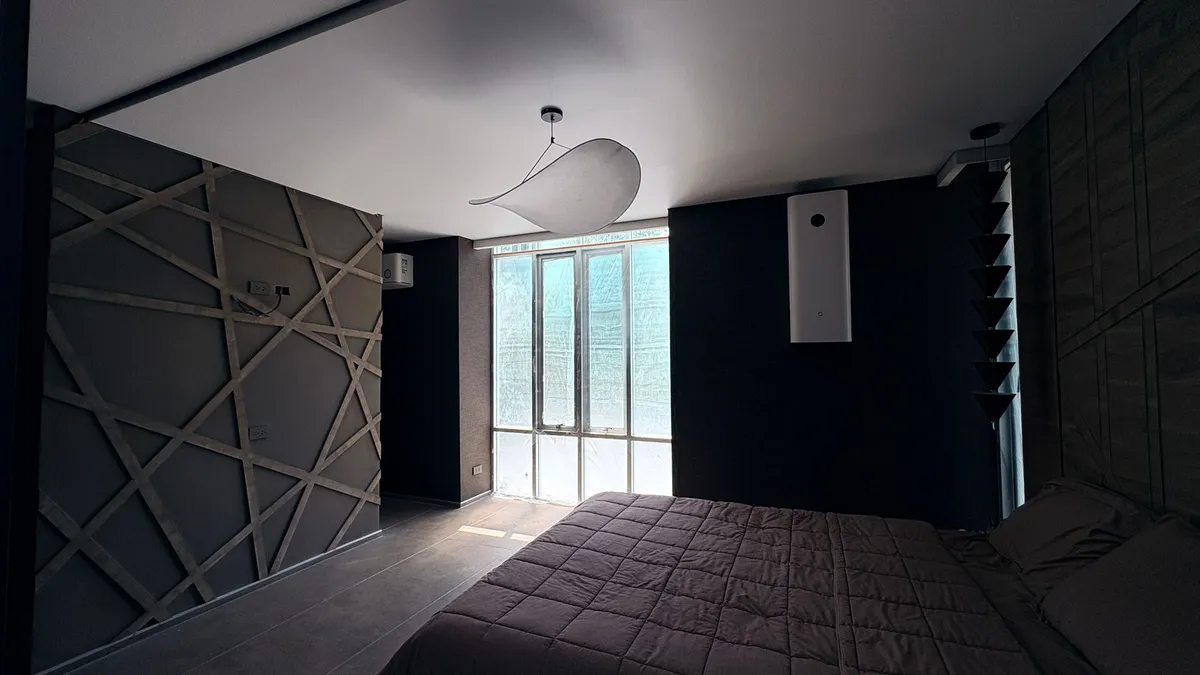
- Premium texture catalogue: uncompromising visual and tactile reproduction of architectural concrete, marble, precious woods, and natural stone
- Photo printing: any image at up to 1440 dpi resolution
- Installed in 1 day: no dust, no adhesive, no debris
- Accent wall: the perfect tool for spatial zoning
- Biological resistance: breathable synthetic material does not condense moisture and provides no nutrient medium for fungi. An ideal, long-lasting solution for dry zones: living rooms, bedrooms, home cinemas, and offices
рџ“ђ LuxeSpan Engineering Brief
From a structural mechanics standpoint, quiet stretch walls significantly reduce the dead load on floor slabs and load-bearing pylons of condominiums. Natural stone imitations of marble or rock add hundreds of kilograms of load to the wall, requiring complex anchor fixings and approvals from the building's Juristic Office. A quiet stretch wall weighs approximately 0.3 kg/m² (even accounting for a concealed acoustic PET absorber), while visually reproducing the stone texture with precision and remaining completely safe during seismic events or new building settlement.
Design without loading the structure or the budget
A LuxeSpan engineer will visit your property with texture catalogues, take laser measurements, and show you how to integrate a premium texture finish without mess, wet processes, or the risk of exceeding allowable structural loads.
Free engineering survey and quote
рџ“ђ LuxeSpan Engineering Brief
Conventional MDF and plaster panels degrade rapidly in Thailand's climate. MDF contains lignocellulosic fibres with high hygroscopicity — when ambient humidity exceeds 75%, they begin absorbing atmospheric moisture, causing the binding resins to swell. Gypsum (calcium sulphate dihydrate) in the joints acts as an ideal porous substrate for mould mycelium growth. Only high-tech synthetic materials (architectural fabric based on polyester) are chemically resistant to these conditions. At the same time, they maintain vapour permeability, completely eliminating the greenhouse effect within the base wall.