
Have you noticed black spots in the corners of your bathroom or a musty smell drifting from the air conditioner? Mould in Phuket is not a question of "if" — it's a question of "when." Ambient humidity of 70—90%, relentless outdoor heat, and ice-cold air conditioning indoors create the perfect thermodynamic incubator for fungal growth.
Mold in coastal condos. Sea humidity of 78–88% + AC = ideal conditions for Aspergillus. In Riviera Wongamat and Copacabana, mold appears behind furniture within 3–4 months. Stretch walls create an air gap that eliminates condensation.
Property owners in Phuket spend thousands of baht on anti-fungal chemicals, repainting, and professional cleaning, yet the mould returns within 3—6 months. That's because they're fighting biology while ignoring physics. The engineering team at LuxeSpan offers a solution that eliminates the root cause of mould.
Thermodynamics and the Dew Point: Why Mould Grows on Concrete
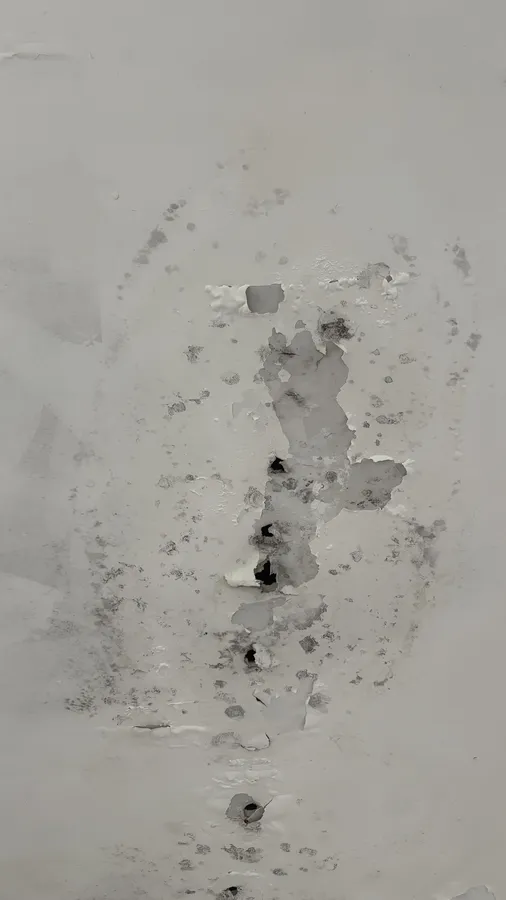
Mould (typically Aspergillus niger or Cladosporium) cannot grow without moisture. But where does the water come from on a seemingly dry wall? The answer lies in partial water-vapour pressure.
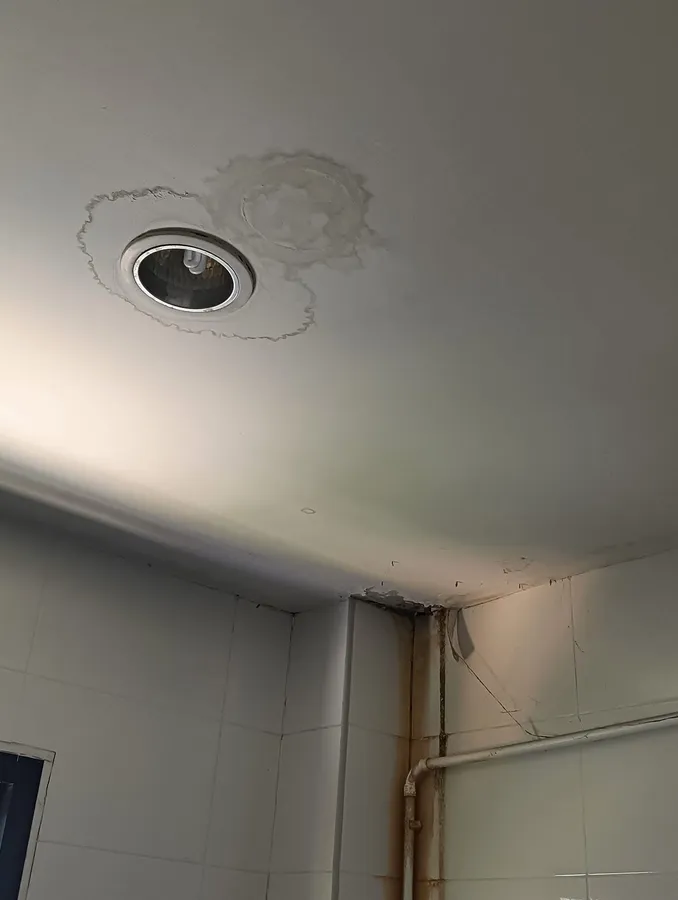
Why Half-Measures Don't Work
| Method | Chemical / Physical Action | Time Until Mould Returns |
|---|---|---|
| Chlorine-based anti-fungal spray | Bleaches the melanin in the fungus, but the mycelium remains embedded in the concrete. | 1—3 months |
| "Anti-mould" paint | Biocide additives leach out quickly. Acrylic is vapour-permeable, but capillary moisture wicking from the concrete carries aggressive salts (efflorescence), which form osmotic blisters and peel the paint off. | 6—12 months |
| Electric dehumidifier | Dries the air but does not shift the dew point inside the wall mass. | The fungus goes dormant but doesn't die |
The Engineering Solution: Synthetics Instead of Organics
The only way to stop mould is to break the thermodynamic equation. You need to remove either the water or the nutrient medium.
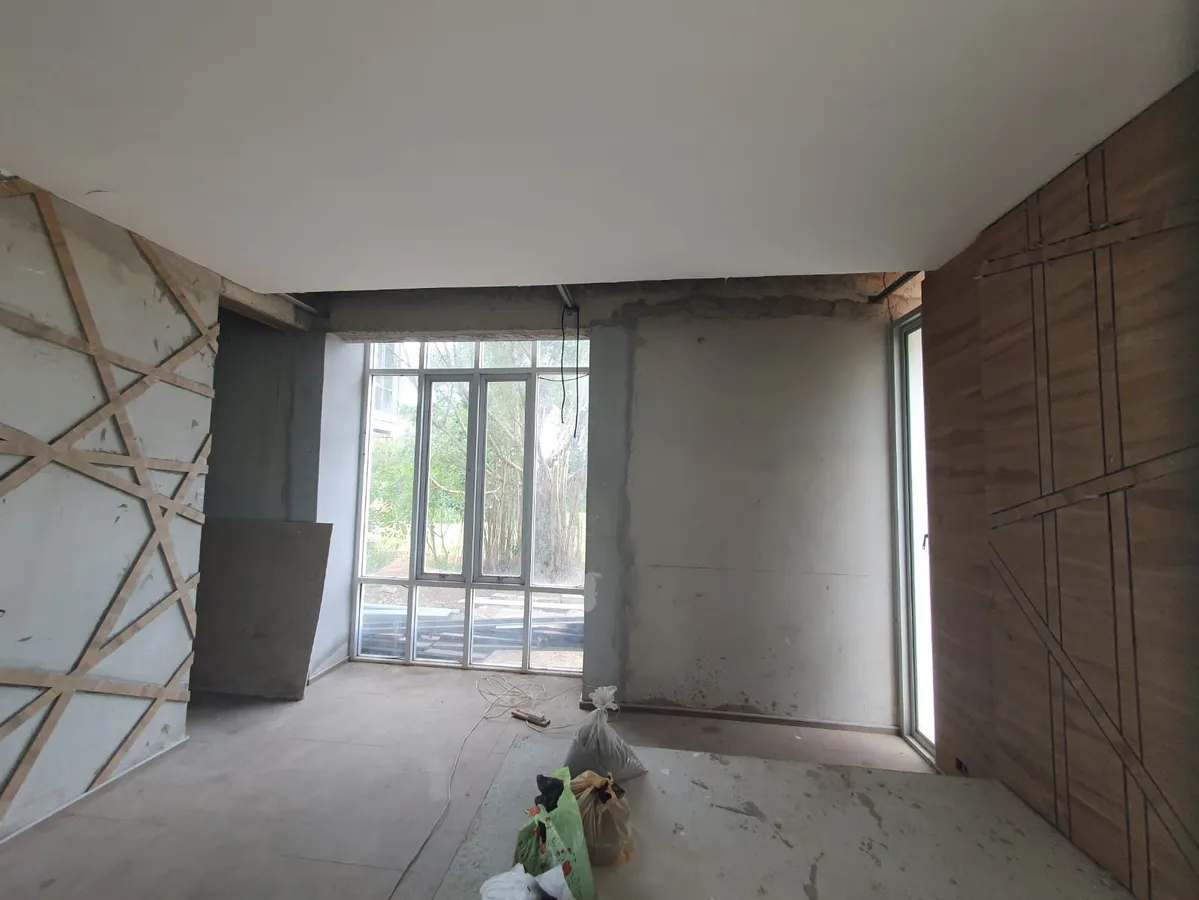
⬆ BEFORE: concrete wall infested with deep mycelium
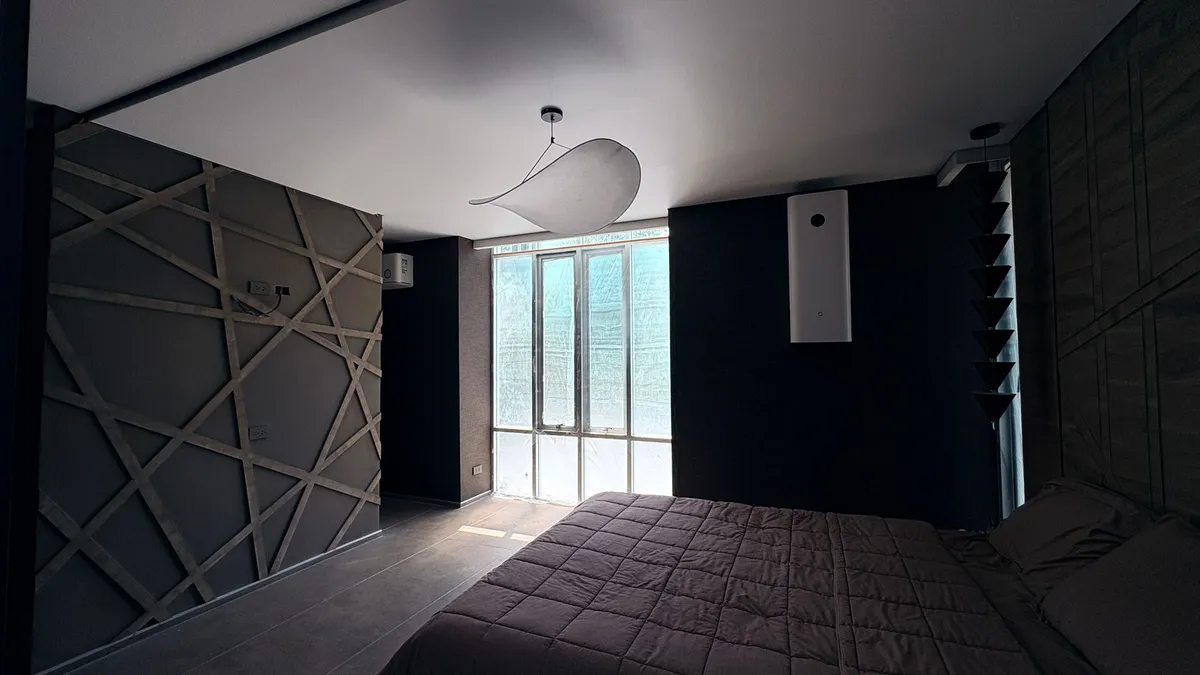
⬆ AFTER: quiet stretch wall by LuxeSpan. Perfect geometry and mould protection.
- Zero food source. Unlike drywall or paint, our stretch systems (both PVC and fabric) are 100% synthetic. They contain no cellulose. There is simply nothing for mould to feed on.
- Smart moisture management on walls. We install quiet stretch walls. The architectural fabric finish does not trap moisture inside the concrete — eliminating the greenhouse effect — while the concealed acoustic PET absorber stays dry and chemically inert.
- Total barrier on the ceiling. Here we use a sealed PVC membrane that acts as a structural thermal break. It keeps the air-conditioned cold inside the room, preventing it from cooling the scorching concrete slab above. No cold concrete means no dew point. Condensation in the above-ceiling void simply cannot form, and the PVC sheet gives mould zero chance of survival.
- Installed in 1 day. No construction dust, no wet trades, no mess.
- 10-year warranty. The materials do not degrade, fade, or crack.
Take a look at our quiet stretch walls and stretch ceilings — or browse the full catalogue of solutions.
Get rid of mould once and for all
An engineer will visit for a free survey, show you membrane samples, and calculate the cost of the solution for your condo. The result — in just 1 day.
🔬 The Thermodynamics of Mould
Concrete and standard plaster are highly hygroscopic (they absorb moisture) and thermally conductive. When it's +35 °C outside and the air conditioner inside is set to +22 °C, a temperature gradient forms within the concrete wall. At a certain layer, the dew point is reached — the temperature at which airborne vapour condenses into liquid water. The concrete gets wet from the inside out. If the wall is lined with drywall, the paper facing (cellulose) becomes an organic nutrient substrate. The combination of water, warmth, and cellulose triggers active mould-colony growth within 48—72 hours.